
A Spring Foraging Guide – Ramps, Morels, Fiddleheads, Violets and More

Spring foraging in the northeast doesn’t announce itself loudly. It starts quietly – a cluster of ramp leaves pushing through the leaf litter on a warm April morning, a honeycomb-capped morel at the base of an old elm, fiddleheads unfurling at the edge of a stream. Each one marks a specific, fleeting moment in the season. Each one disappears almost as quickly as it arrives.
I’ve been cooking with foraged spring ingredients for years here in the Hudson Valley, and every spring the same thing happens – the season moves faster than you expect, and if you’re not paying attention you miss the window entirely. This guide is my way of making sure you don’t. It covers the six spring foraged ingredients I reach for every year, when to find them, and what to make when you do.
This is a cooking guide, not an identification guide. Always verify what you’ve found before eating anything foraged – and when in doubt, leave it out.
When to Find What
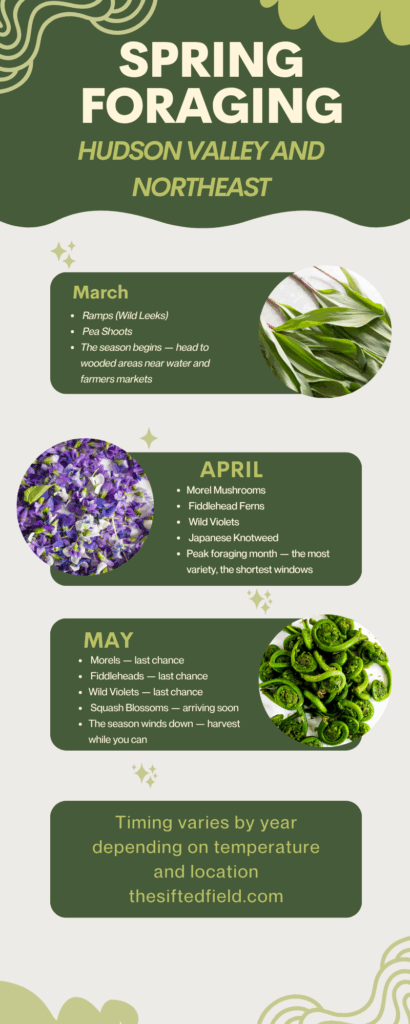
March – April: Ramps, Pea Shoots
April – May: Morel Mushrooms, Fiddlehead Ferns, Wild Violets, Japanese Knotweed

Ramps (Wild Leeks) – March to April
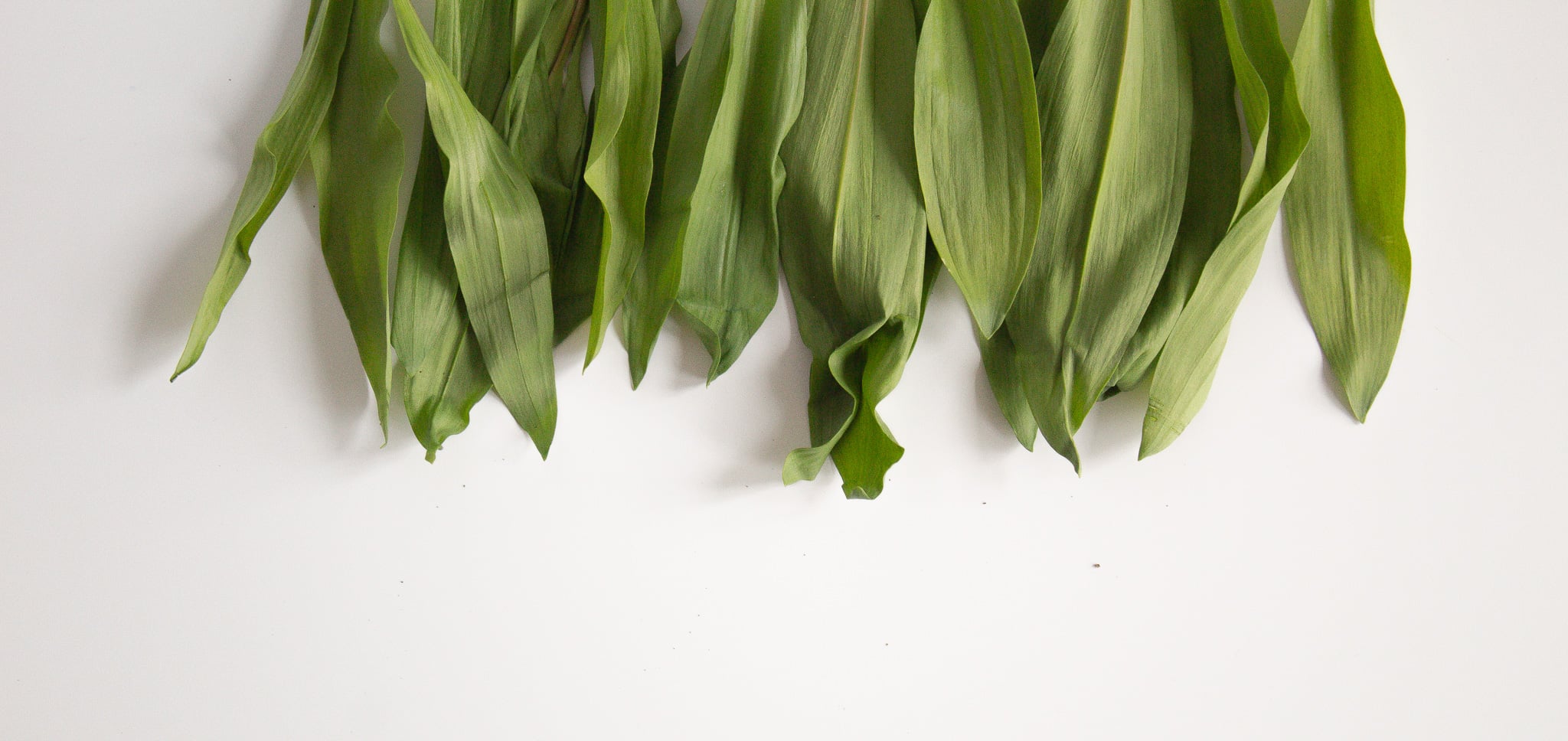
Ramps are one of the first edible plants to emerge in early spring, pushing up through the forest floor before most other green things have even thought about waking up. They have broad, flat green leaves and a flavor that sits somewhere between garlic and onion – bold, bright and deeply savory. The season is short, usually just a few weeks, so grab them when you see them at the farmers market or head out to wooded areas near water with a bag and a knife.
When foraging ramps, cut at the base of the stem and leave the root in the ground. Take only what you need and leave the patch intact – sustainable harvesting keeps your favorite spots productive for years to come. Store harvested ramps wrapped in damp paper towel in the fridge for several days.
Ramps work beautifully raw, sautéed, blended into sauces and pestos, or tucked into anything that would normally call for garlic or green onion. Here’s where to start:
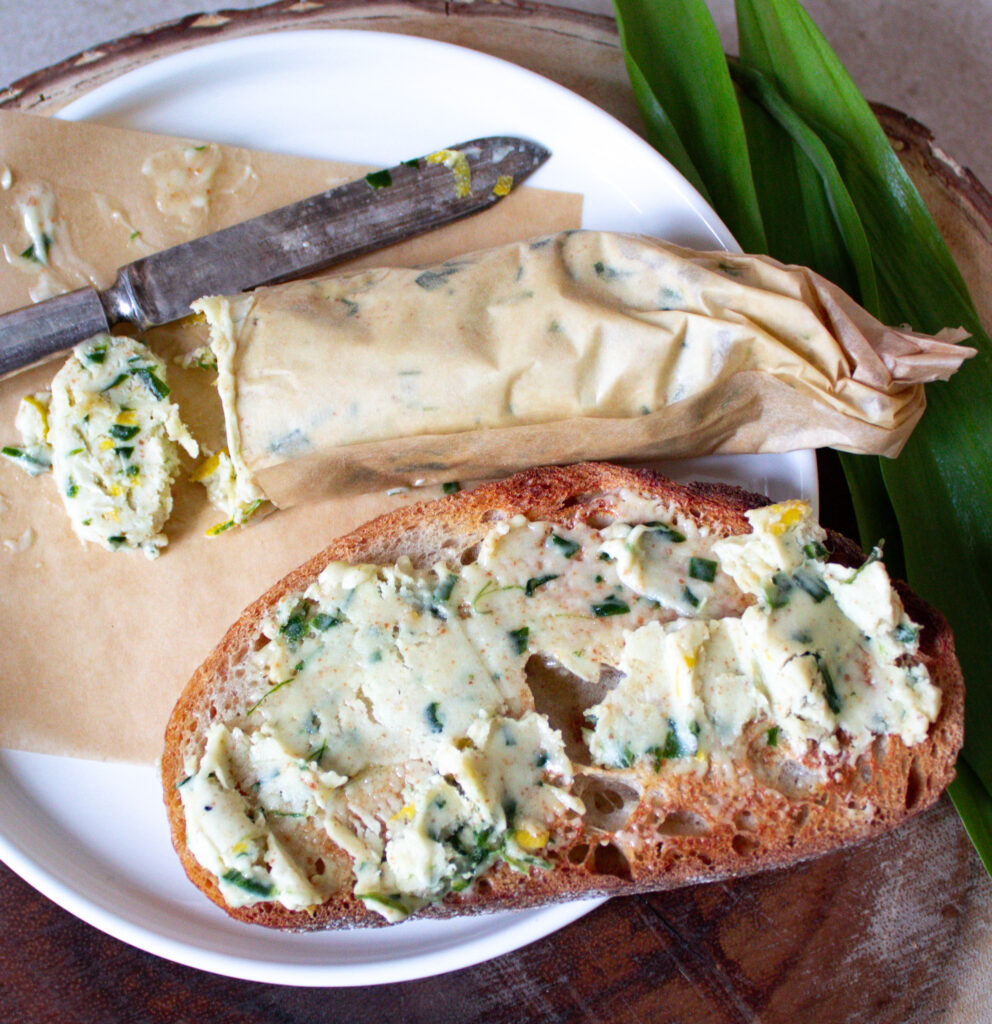
Browned Butter Ramp Compound Butter with Lemon Zest – a spring compound butter filled with bright ramp flavor with a deep undertone of browned butter.
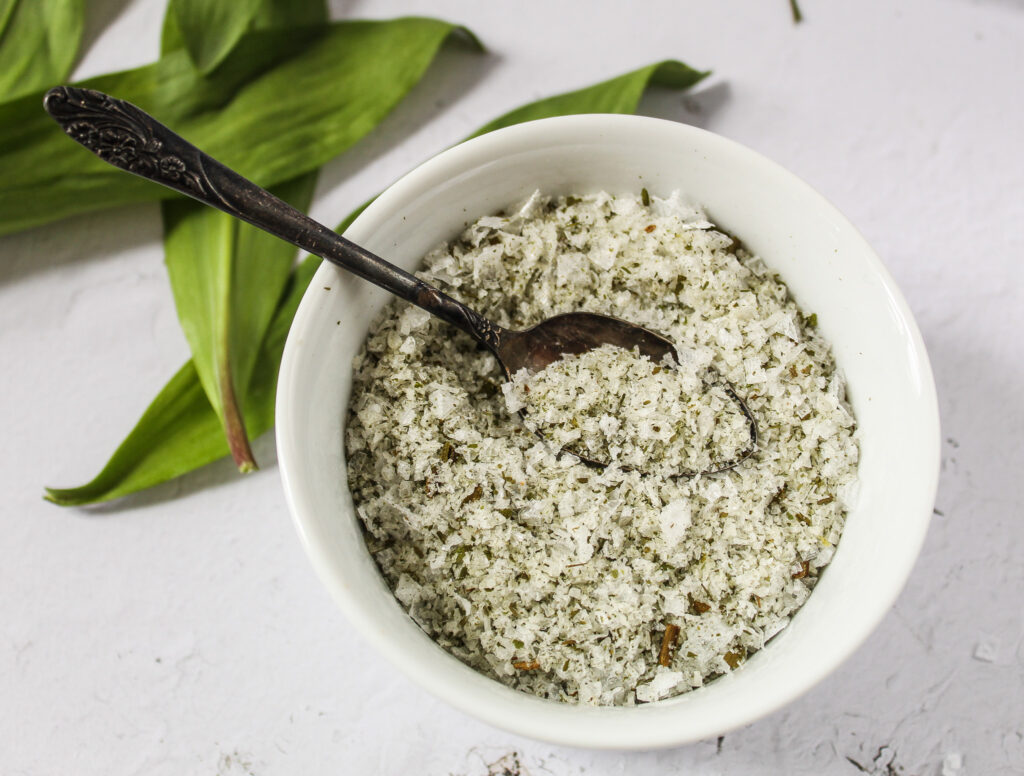
Roasted Ramp Salt with Flaky Sea Salt – a ramp preserve worth making now and storing to extend ramps short season.

Everything You Need to Know About Ramps – the complete guide
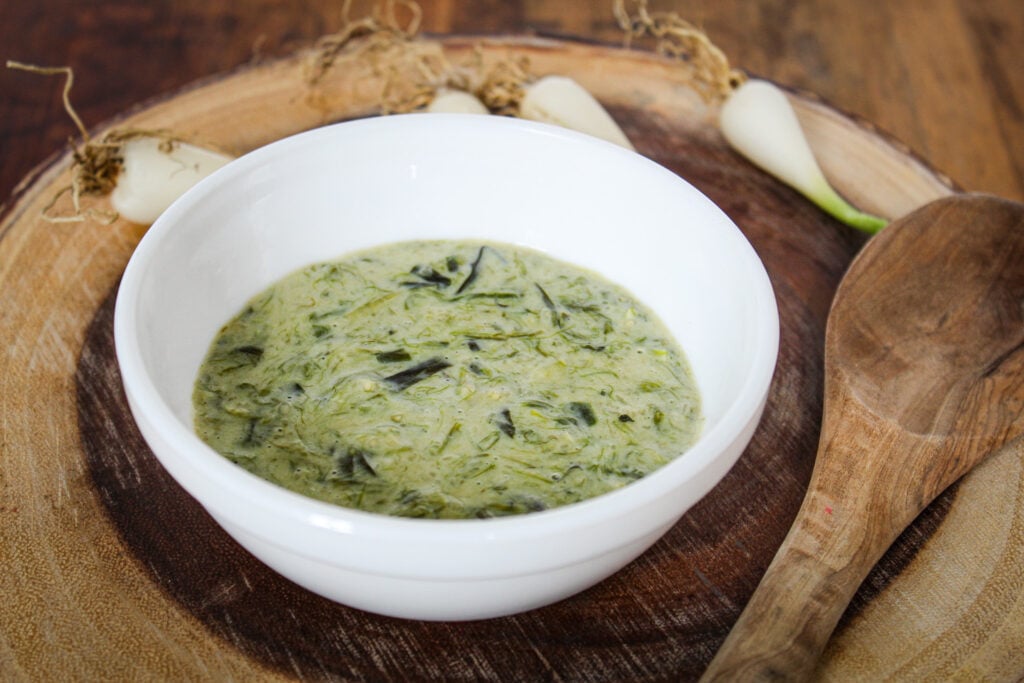
Wild Ramp Cream Sauce – simple, versatile, endlessly useful
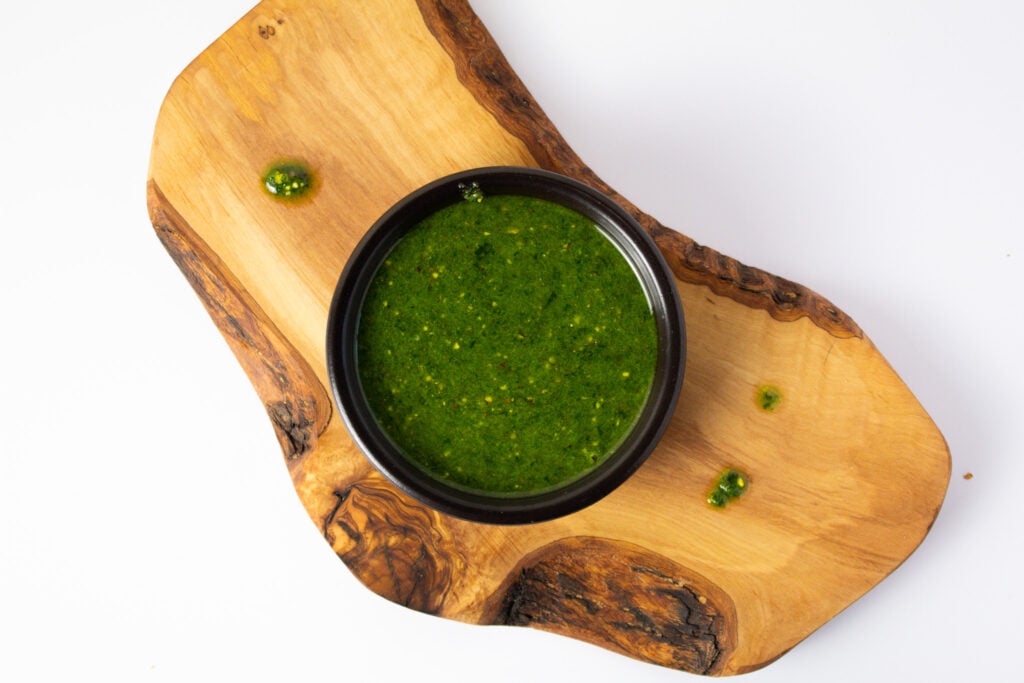
Wild Ramp Pesto with Anchovy and Pistachio – bold, garlicky and completely unlike any pesto you’ve made before

Wild Ramp and Mushroom White Pizza – a truly seasonal pizza you can only make for a few short weeks

Wild Ramp Ricotta Calzone – a spring weeknight dinner that feels special without being complicated.
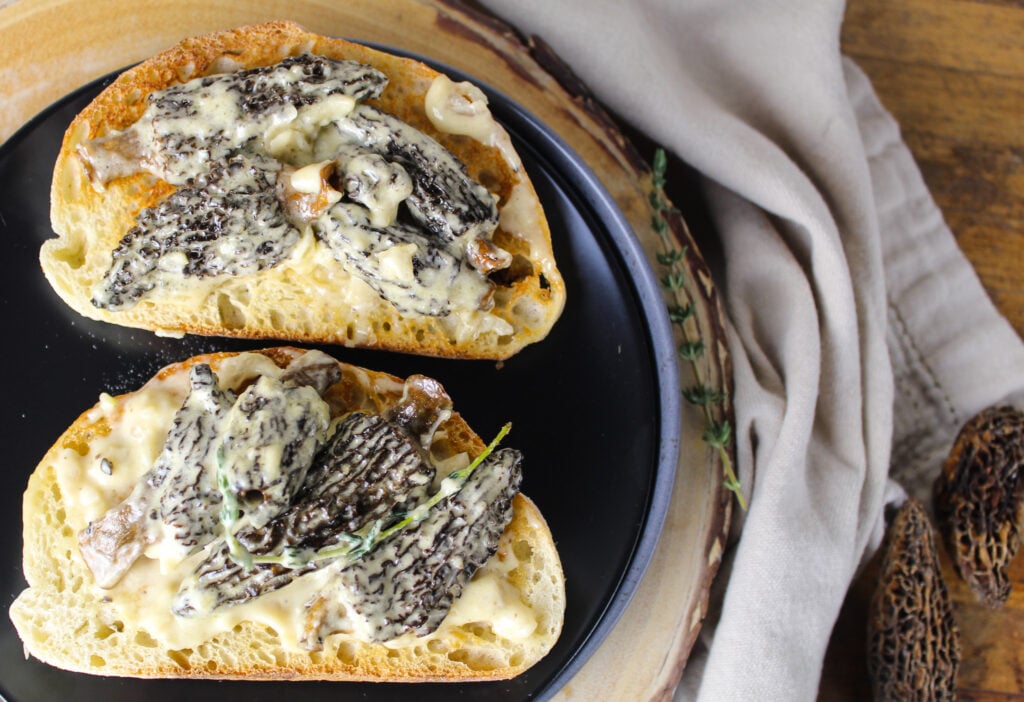
Morel Mushrooms – April to May
Morel mushrooms are the most prized find of spring foraging season. Their distinctive honeycomb caps and earthy, nutty flavor are completely unlike any cultivated mushroom – deeper, more complex, and entirely their own. They appear in wooded areas near elm, ash and apple trees, usually for just two to three weeks before the heat of late spring ends the season.
Always cook morels before eating – never raw. Clean them gently by halving and brushing away any debris. When you have fresh morels, the best thing you can do is keep the recipe simple and let the mushrooms do the work.
– Creamy Morel Mushroom Toast – butter, shallots, thyme and cream, on thick toasted bread, ready in under 20 minutes.

Fiddlehead Ferns – April to May
Fiddlehead ferns are the tightly coiled young shoots of the ostrich fern, harvested in early spring before they unfurl. They have a bright, grassy flavor somewhere between asparagus and green beans, and a satisfying bite that holds up beautifully to high heat. Find them near streams and riverbanks, or at spring farmers markets across the northeast.
Always blanch fiddleheads before cooking – a quick boil removes any bitterness and makes them tender without losing their bright green color. From there they’re incredibly versatile – roasted, stir-fried, sautéed in garlic and butter or served alongside fish.
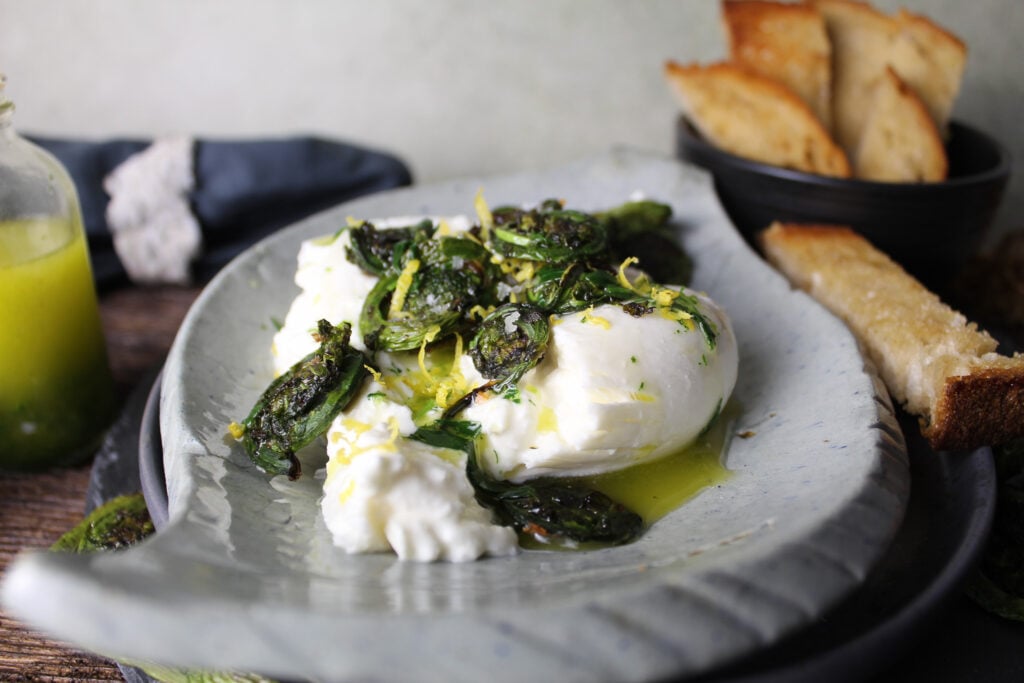
Grilled Fiddleheads with Burrata and Tarragon Oil – An elegant spring appetizer with grilled fiddlehead ferns over fresh burrata cheese and sprinkled with a tarragon olive oil

Crispy Fiddlehead Ferns Appetizer with Zesty Lemon – garlic parmesan breadcrumbs, sheet pan, lemon black pepper mayo.

Fiddlehead Fern Stir Fry with Garlic Ginger Shrimp – 20 minutes, rice noodles, completely seasonal.
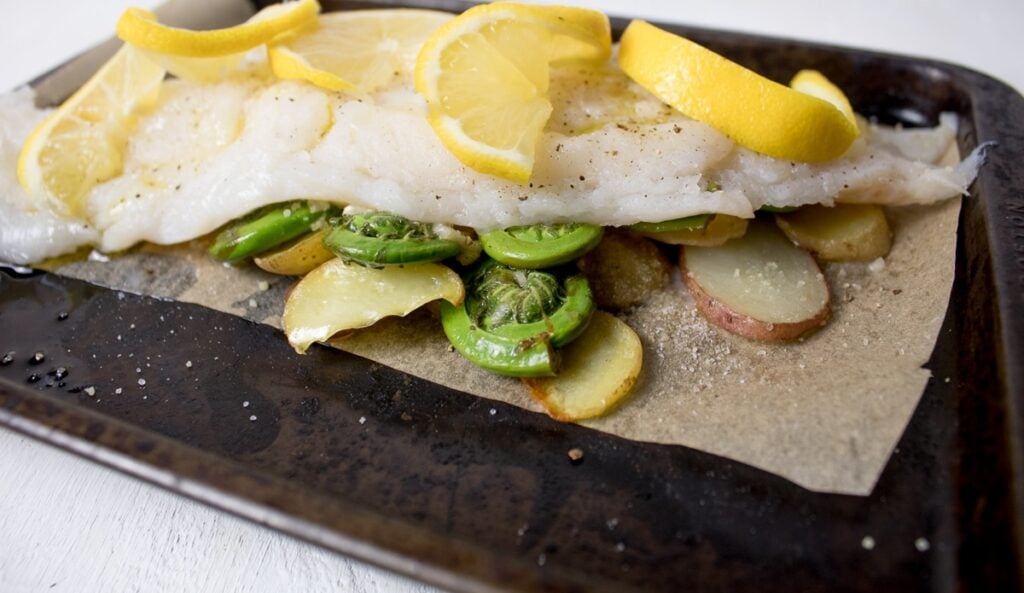
One Pan Fiddleheads with Potatoes and Haddock – the easiest spring dinner you’ll make all season.
–
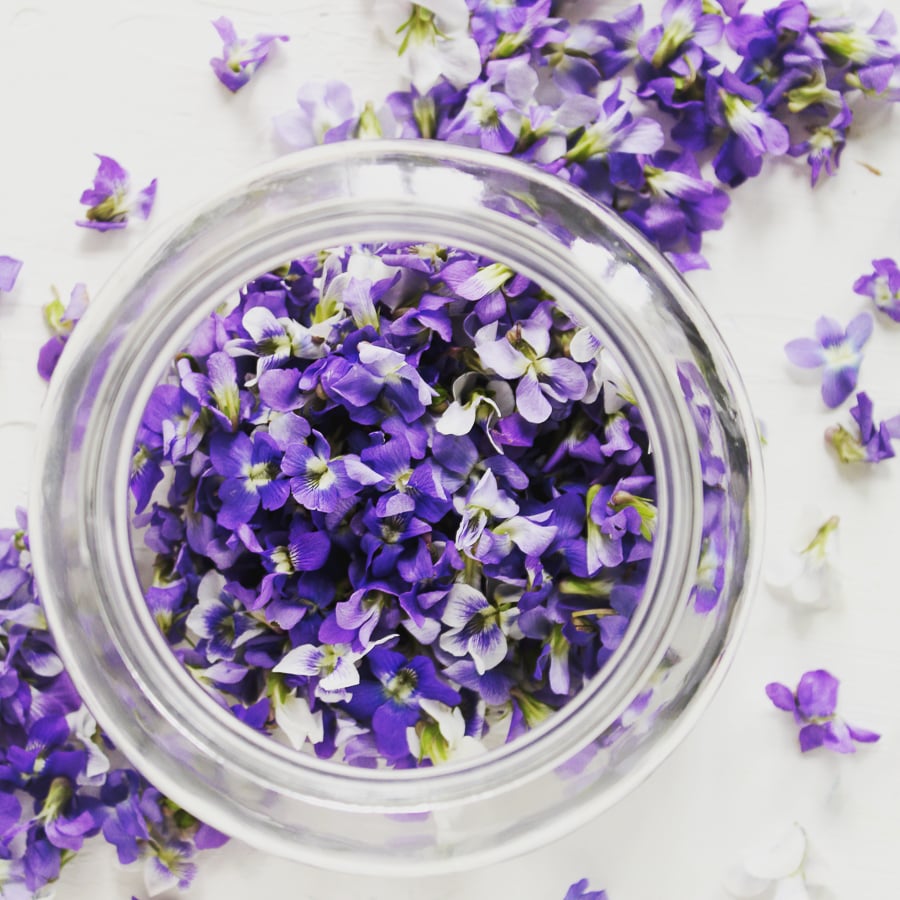
Wild Violets – April to May
Wild violets burst open in early spring in varying shades of white to deep purple. They’re edible straight from the stem and have a musky, floral taste with a sweet finish. I’ve been picking them since childhood – baskets filled with delicate flowers in preparation for violet jelly — and I still make a small batch every year.
The key thing to know about cooking with violets is that heat is their enemy. The flavor is extremely delicate, and overheating damages the floral essence entirely. I use violets almost exclusively in cold applications – jelly, ice cubes, sugared flowers and ice cream – where the flavor shines brightest and that musky, almost honey-like sweetness really comes through.

Wild Violet Recipes – Jelly, Sugared Flowers, Ice Cream and More – five simple ways to use wild violets in the kitchen
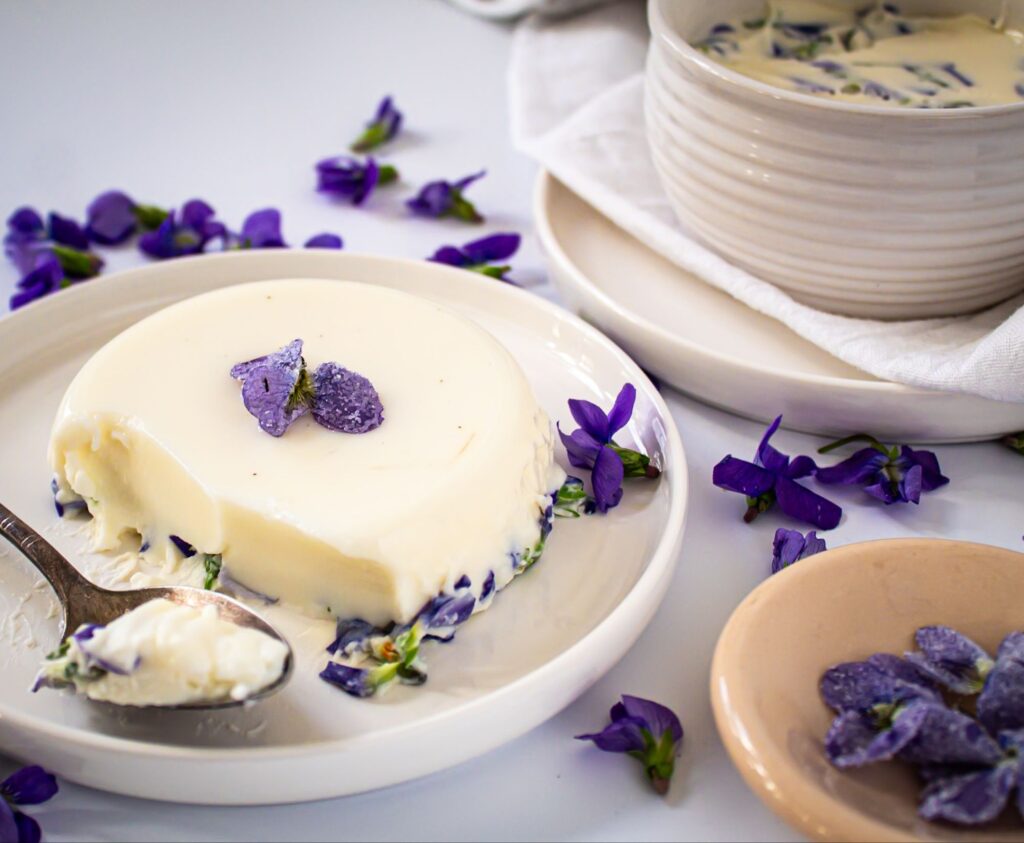
Violet panna cotta – is a delightful (and simple) spring dessert.
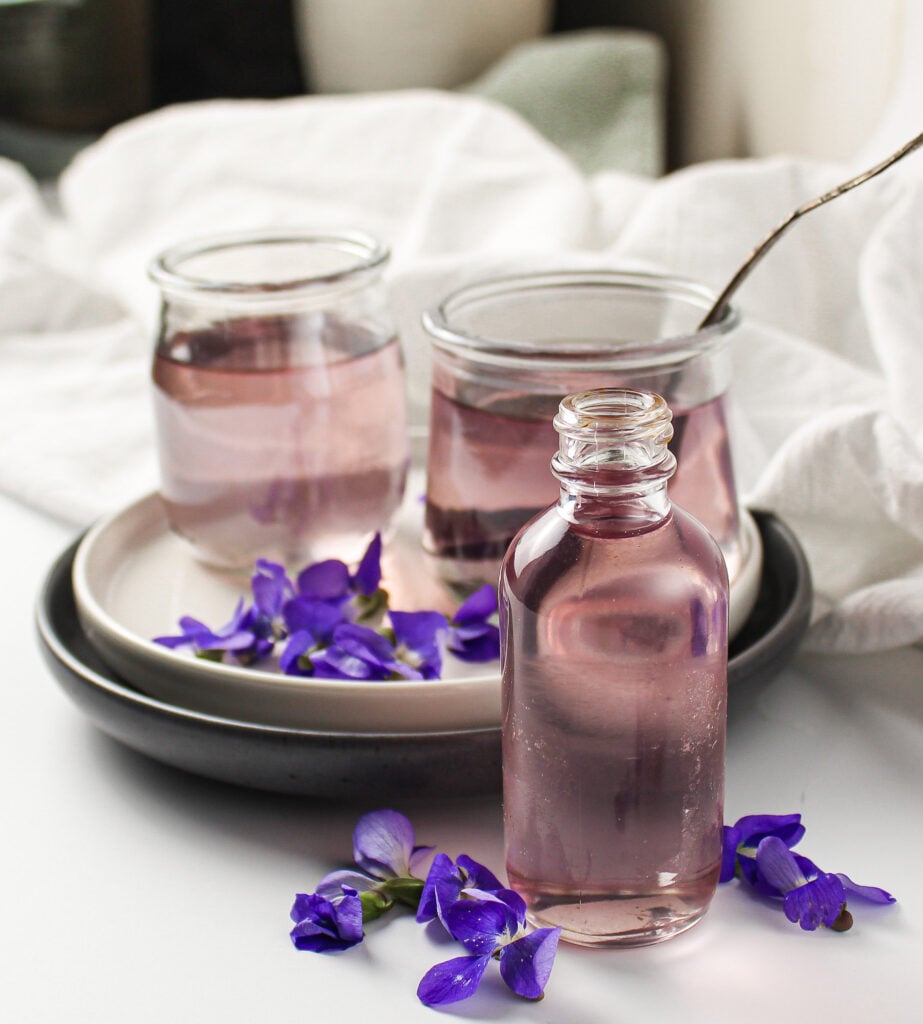
Homemade Violet Simple Syrup – a floral addition to lemonade, sparkling water and cocktails.
Pea Shoots – March to May
Pea shoots are the tender young leaves and tendrils of the pea plant, harvested before they mature into full vines. They have a fresh, lightly sweet flavor that tastes unmistakably of spring, and they’re one of the most versatile foraged greens of the season – raw in salads, lightly wilted in warm dishes, blended into pesto, folded into scrambled eggs or used to make botanical sugar. Find them at farmers markets, through CSA boxes or grow your own on a sunny windowsill.

Pea Shoots: How to Use, Cook and Preserve – the complete guide.
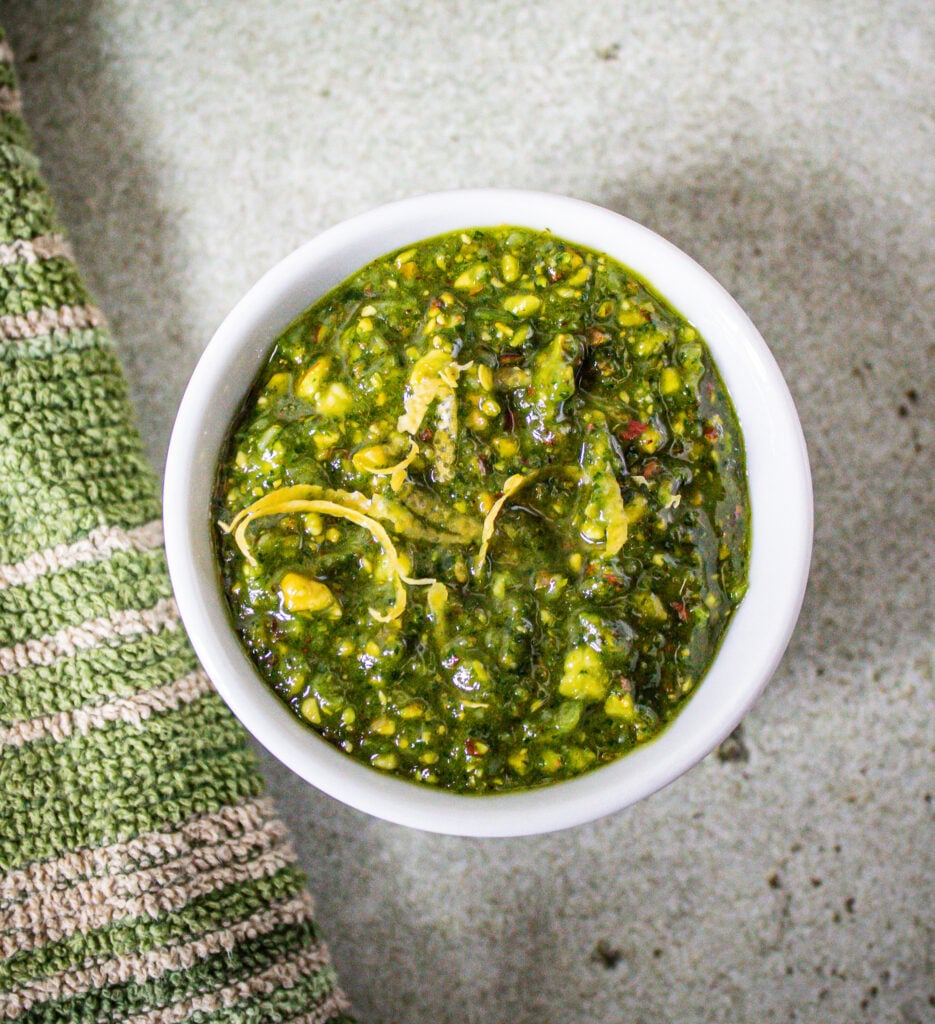
Pea Shoot Pesto with Pistachios – bright green, lightly herbal, completely versatile.
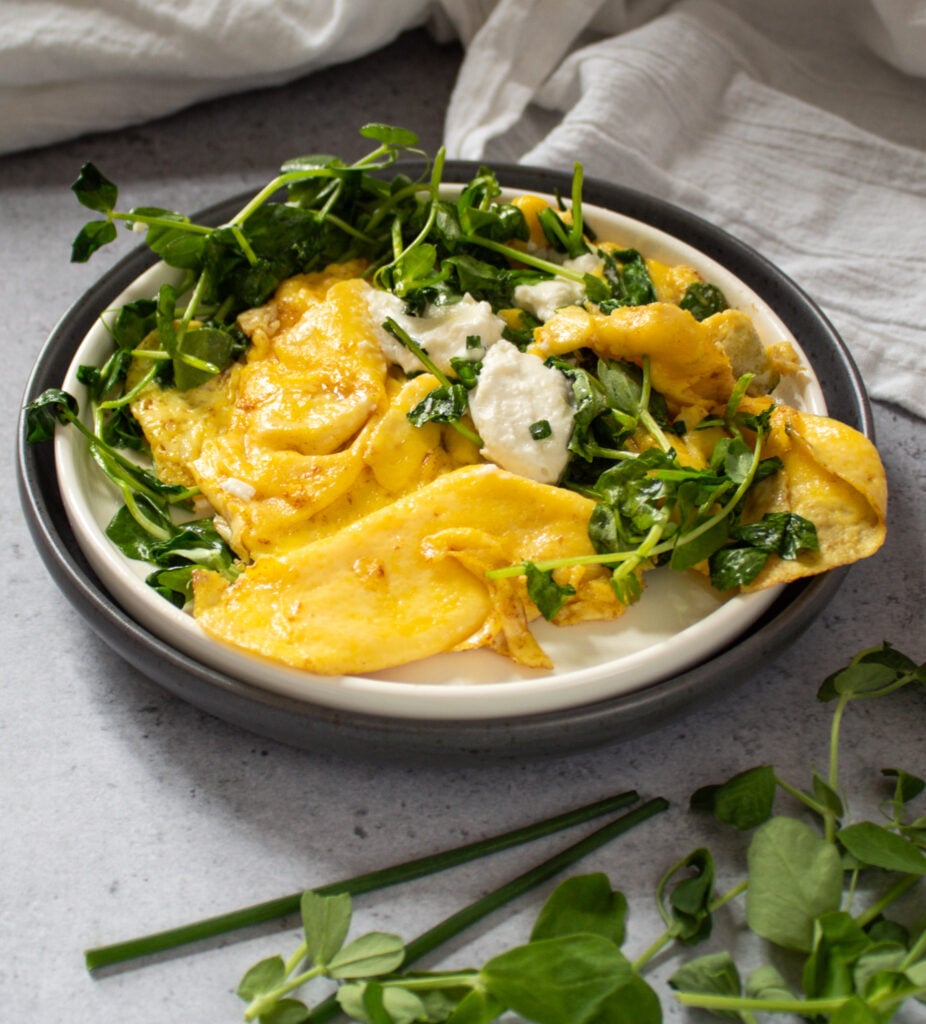
Scrambled Eggs with Pea Shoots, Goat Cheese and Chives – the best spring breakfast, ready in 15 minutes.
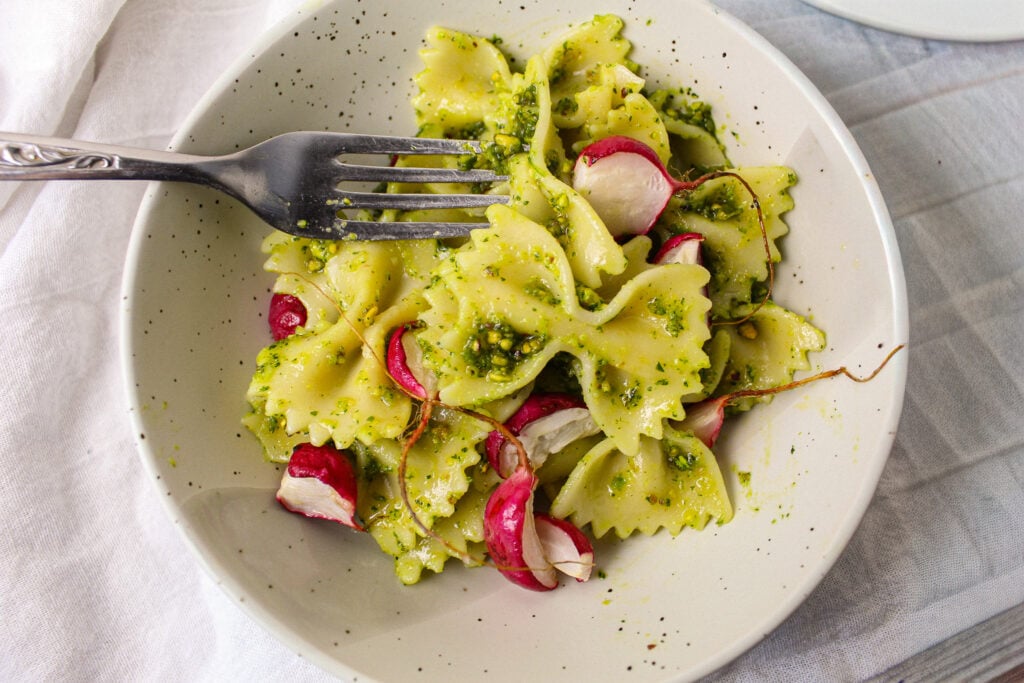
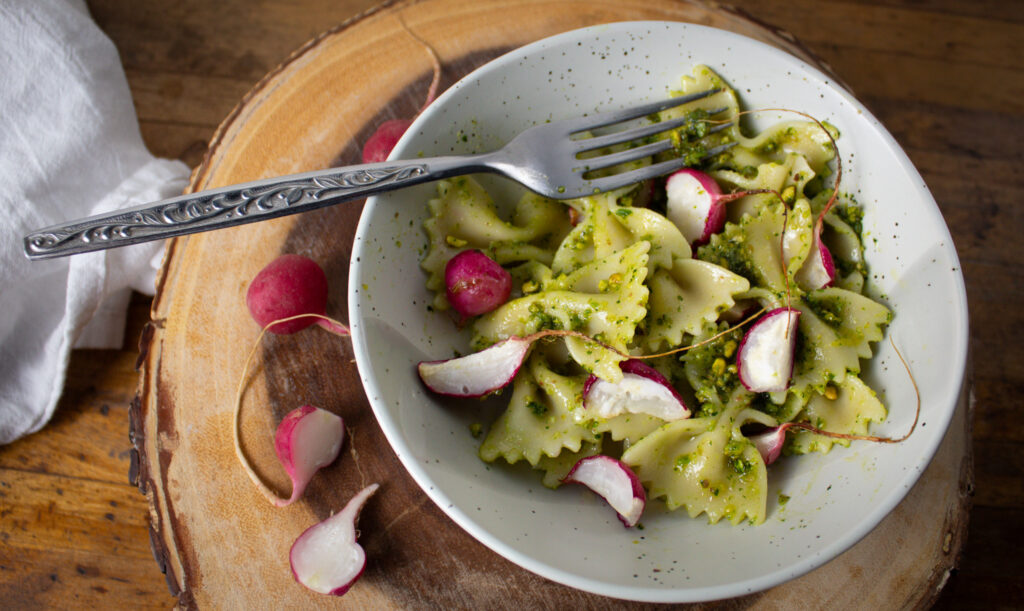
Farfalle with Pea Shoot Pesto and Roasted Radish – a 30 minute spring dinner that looks and tastes like real effort.

Pea Shoot Sugar – a lightly herbal botanical sugar for baking, tea and cocktails.
–
Japanese Knotweed – April to May
Japanese knotweed is one of the most invasive plants in the northeast – and one of the most underused spring ingredients. The young shoots emerge in early spring with a bright, tart flavor remarkably similar to rhubarb, making them a natural stand-in for any recipe that calls for tart spring fruit. Harvest the young bamboo-like shoots early in the season before the stalks thicken – once they get older the texture becomes tough and woody.
Foraging knotweed is genuinely good for the environment. It’s an invasive species and harvesting it helps control its spread. Pick young shoots in early April, strip the leaves and use wherever you’d use rhubarb.
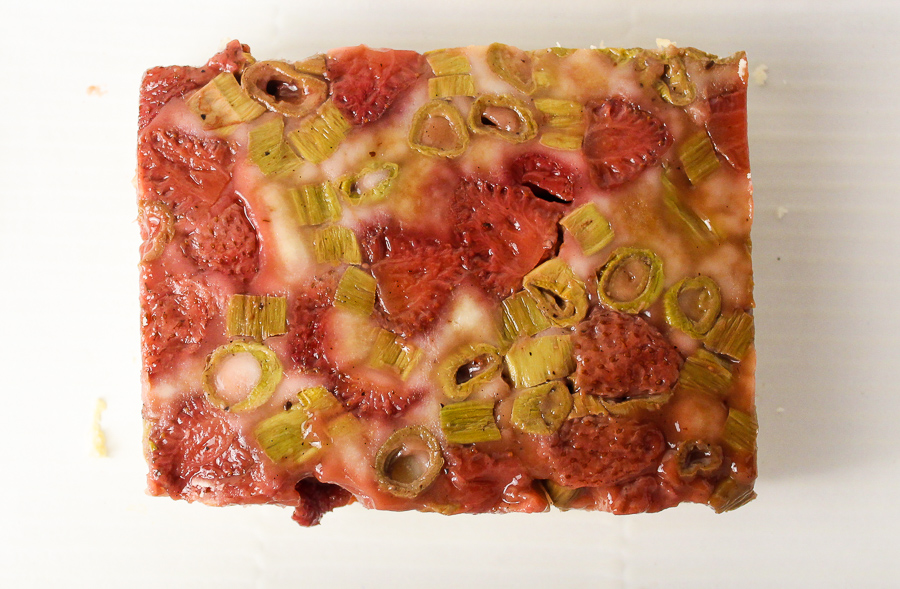
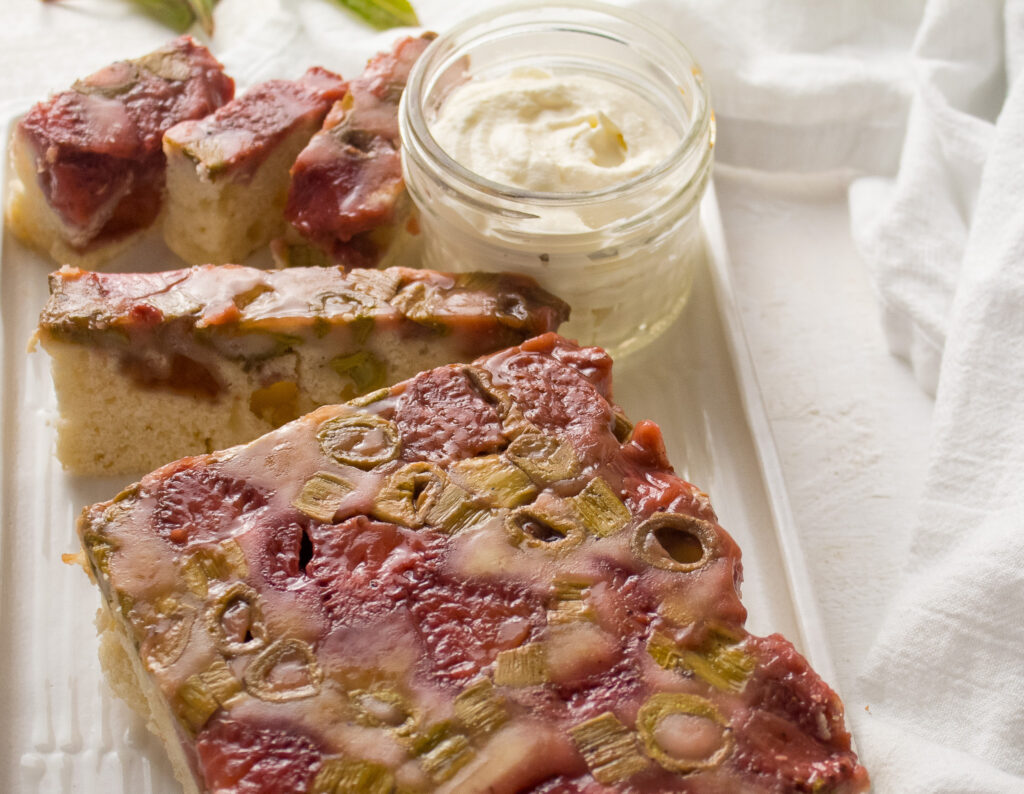
Strawberry and Foraged Knotweed Upside Down Cake – bright, tart and caramelized, a beautiful spring bake.

Knotweed Fruit Roll Ups – a fun, seasonal way to preserve the early spring harvest.
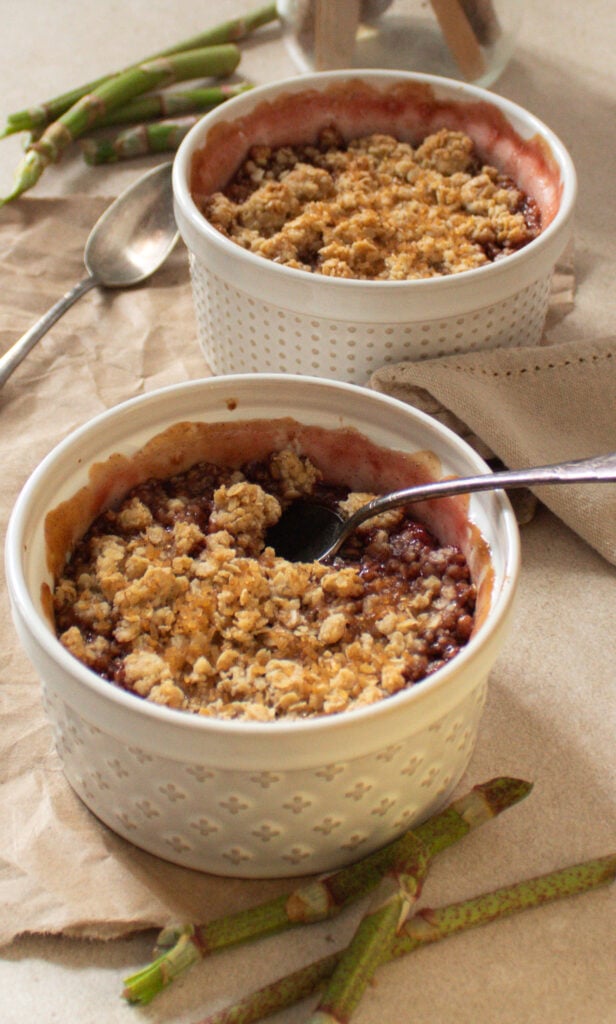
Japanese Knotweed and Strawberry Ginger Crisp with Cardamom – Japanese knotweed baked until bubbling under a ginger spice oat crisp topping.
When does spring foraging season start in the northeast?
Ramps and pea shoots typically begin appearing in March, with morels, fiddleheads, violets and knotweed following in April and May. Timing varies by year depending on how quickly the ground warms.
Where can I find ramps and morels?
Both grow in wooded areas near water. Ramps prefer shaded forest floors near streams. Morels tend to appear near elm, ash and apple trees. Local foraging groups and Facebook Marketplace are also good resources for sourcing foraged ingredients if you’d rather not hunt yourself.
Can you eat fiddleheads raw?
No – always blanch fiddleheads before eating. Raw fiddleheads can cause digestive upset. A quick boil removes any bitterness and makes them safe and tender to cook with.
Are wild violets safe to eat?
Yes – wild violets are edible and have been used in kitchens for centuries. Always make sure you’ve correctly identified what you’ve picked. Avoid violets from areas that may have been treated with pesticides or herbicides.
What is Japanese knotweed and why should I forage it?
Japanese knotweed is a highly invasive plant that spreads aggressively and crowds out native species. Harvesting it is genuinely helpful for the environment. The young spring shoots taste remarkably like rhubarb and can be used the same way in cooking and baking.
Is spring foraging safe for beginners?
Spring foraging can be safe for beginners with the right approach – go slowly, verify identification carefully using multiple reliable sources, and never eat anything you’re not completely certain about. Starting with well-documented ingredients like ramps and fiddleheads is a good way to build confidence.
Spring foraging is one of the things I look forward to most about this time of year. The window for each ingredient is so short that it forces a kind of attention – you have to actually notice what’s happening outside, what’s ready, what’s about to disappear. That urgency is part of what makes cooking with foraged ingredients feel so alive.
Bookmark this guide and come back to it each spring as the season unfolds. And if you make any of the recipes linked here, leave a comment – I’d love to know what you found and what you made with it.
I like leeks!