

Savory Wild Ramp Pesto with Anchovy and Pistachio
Ramps: A Bright, Green, Springtime Foraged Favorite
This wild ramp pesto is bold, garlicky and completely unlike any pesto you’ve made before. Fresh foraged ramps are blended with anchovy, pistachio and parmesan into a vibrant green condiment that works on everything – pasta, toast, grilled fish, cheese boards, or slathered onto Italian bread for a wild spring take on garlic bread. It comes together in under 10 minutes and keeps in the fridge for up to two weeks. If you can get your hands on ramps this spring, this is the first recipe to make.


Into the Wild: Foraging for Ramps and Crafting a Spectacular Ramp Pesto with Anchovy and Pistachio
Foraging ramps is a delightful way to connect with nature and gather fresh, flavorful ingredients. Follow these steps to responsibly forage ramp plants:
1. Know When and Where to Look: Ramps (Allium tricoccum) typically emerge in early spring, usually in April or May, in wooded areas with moist, rich soil. Look for them in forests with deciduous trees, often near streams or in shady, damp spots.
2. Identify Ramps: Ramps have broad, smooth, bright green leaves that resemble lily of the valley but with a strong onion or garlic smell. They also have a bulb, which is white and often tinged with pink or purple.
3. Harvest Responsibly: Only harvest ramps where they are abundant and avoid taking more than you need. Use a small trowel or knife to carefully dig around the base of the plant, being mindful not to damage the bulb or roots. By pulling the plant out by the roots, you remove the whole plant and inadvertently damage next years harvest, as the patch will diminish over time.
4. Clean and Store Ramps: Once home, gently clean the ramps to remove dirt. Trim off the roots and any damaged parts. Store them in the refrigerator wrapped in a damp paper towel or cloth for up to a week.
By foraging ramps responsibly, you can enjoy their unique flavor while preserving these wild plants for future years worth of foraging harvests.
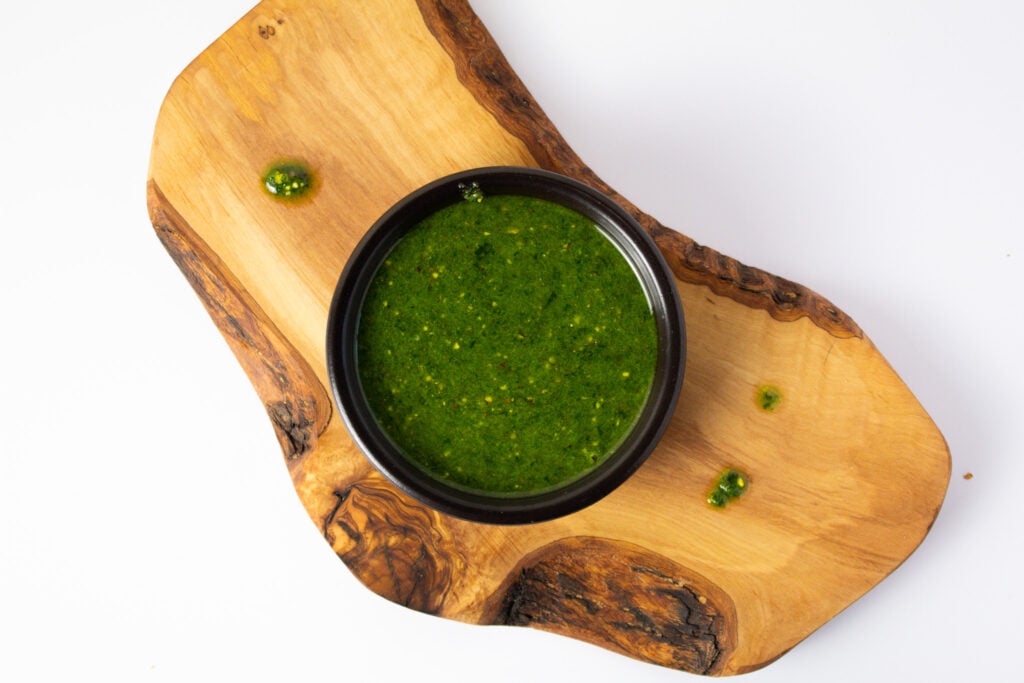
What Makes This Ramp Pesto Different
Most pesto’s are a combination of pine nuts and basil. This one swaps in ramps for a wilder, more pungent base and pistachios for a richer, slightly sweeter crunch. The anchovy is the secret weapon – it adds a deep umami note that you won’t be able to identify but won’t want to leave out. The resulting pesto is bolder, richer and much more complex than the classic recipe. New to cooking with ramps? My complete guide to cooking with ramps is a great place to start.
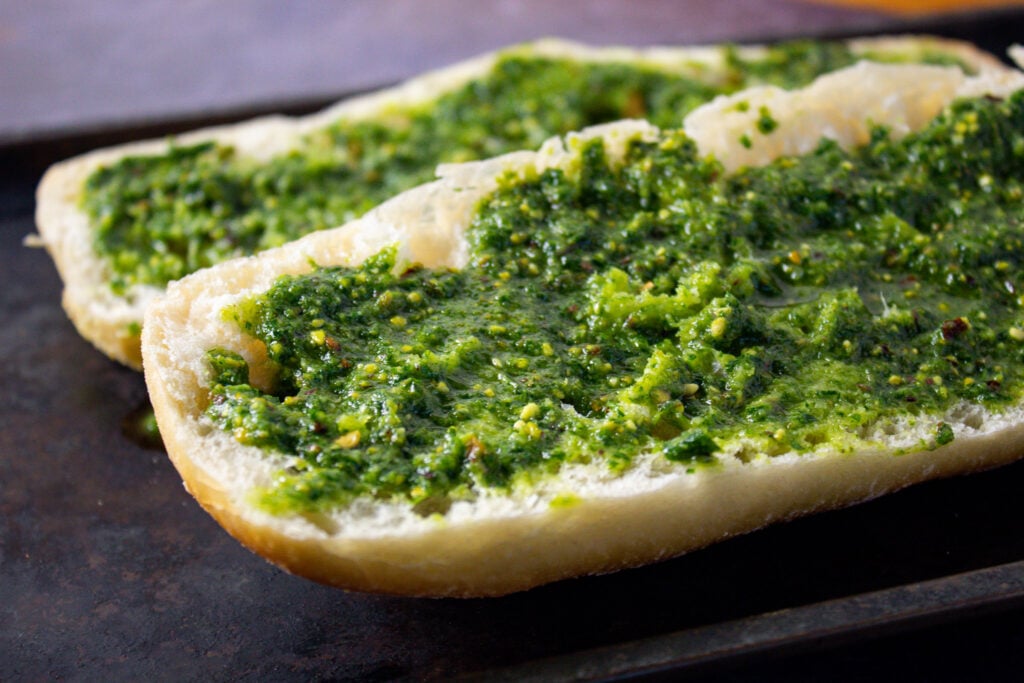
How To Use Ramp Pesto
This pesto is versatile and lends itself to many culinary uses. here are some of my favorite:
- Toss it with pasta for a quick spring dinner
- Spread on Italian bread and toasted for a wild ramp garlic bread — recipe included below
- Spoon over grilled or poached salmon
- As an alternative base for mushroom ramp pizza
- On a cheese board alongside a savory spring chutney
- Stirred into scrambled eggs
Storage:
Store ramp pesto in a sealed glass container in the refrigerator for up to 10 days. Press a piece of plastic wrap directly onto the surface of the pesto or pour a thin layer of olive oil over the top before sealing — this prevents browning and keeps the color vibrant.
Another long term storage recipe for ramps is my Roasted Ramp Flaky Sea Salt. Savor the flavor of ramps all year by creating your own salt infusion.
Can I Make this Without Anchovies?
Yes, just add an extra bit of salt.
Can I Substitute the Pistachio’s with Another Nut?
Yes, try the classic pine nuts or experiment with walnuts.
Can I Freeze Ramp Pesto?
Yes, use an ice cube tray to pour small cubes, then store in freezer in a freezer bag.
More Spring Condiment Recipes
If you love bold spring condiments, my creamy wild ramp sauce is another great way to use ramps — silkier and milder, perfect over pasta or fish. The ramp ricotta calzone uses ramps in a completely different way and makes a great spring dinner. And when garlic scapes arrive a little later in the season, my garlic scapes confit is the next bold allium condiment worth making.
On the sweeter side of spring botanicals, pea shoot sugar is a stunning natural green sugar perfect for spring baking.
Another savory spring condiment worth making — rhubarb and fennel chutney is unexpected and completely delicious.
If you want to keep the pesto making going beyond ramp season, this carrot top pesto is a beautiful year round option that uses an ingredient most people throw away.
Cook the season – spring is here.

Savory Wild Ramp Pesto with Anchovy and Pistachio
Ingredients
Ramp Pesto
- 12 Ramp leaves
- 1 Cup Olive Oil Extra Virgin
- 1 Fillet Anchovy
- 1 Tbsp Parmesan Cheese Grated
- 1 Tsp Red Pepper Flakes
- 3 Tbsp Pistachio Nuts Shelled, Unsalted
Ramp, Wild Leek "Garlic Bread" Recipe
- 1 Loaf Italian bread
Instructions
Ramp Pesto
- Combine all ingredients in blender
- Add pistachios to food processor and pulse until nuts are roughly chopped.
- Place remaining ingredients in food processor and pulse until all items are combined and finely mixed.

- Ramp Pesto will keep in the fridge for up to 2 weeks.
Ramp, Wild Leek "Garlic Bread"
- Preheat oven to 350 degrees Fahrenheit
- While oven heats, slice Italian bead in half, leaving a top half and bottom half.
- Slather pesto evenly across both sides of the bread loaf.

- Place on pan and bake, face up for 15-22 minutes
- Slice into smaller pieces, and enjoy!
